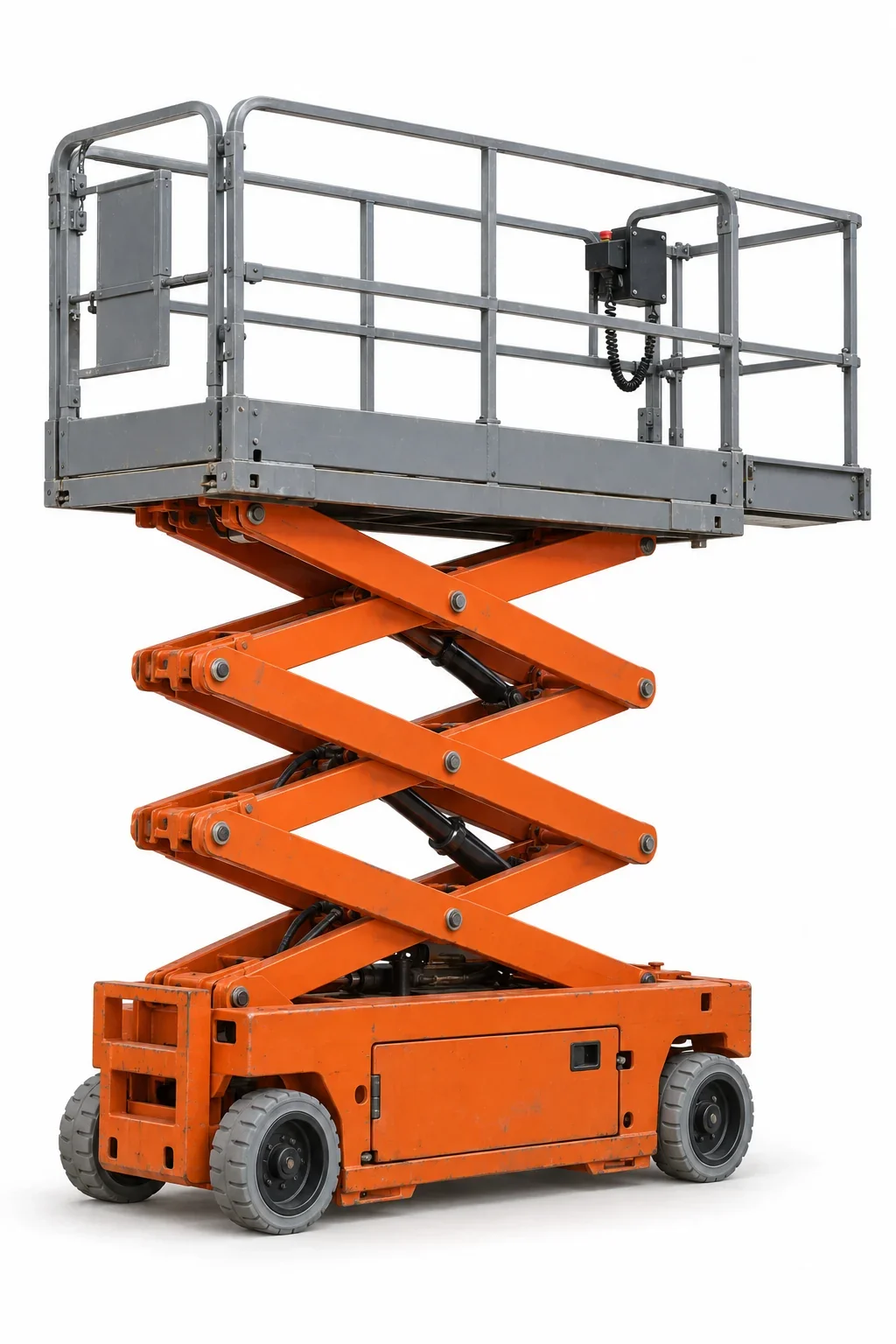
Fit the lift to interior geometry
- Ceiling height vs. platform height: confirm the needed platform range and keep some room for tools and materials.
- Doorways and elevators: width, length, and stowed height determine whether a larger platform can pass through older building cores.
- Aisles and turning: tight racking or lab corridors call for narrow chassis and precise steering.
If an obstruction prevents the lift from sitting under the task, a small articulating boom at /boom-lift-rental/ or /aerial-lift-rental/ may solve up-and-over needs.
Why Raleigh interiors lean electric
The region’s indoor facilities emphasize non-marking tires, low emissions, and controlled noise. Electric scissor lifts meet those constraints while providing frequent cycling for tasks along production lines, office build-outs, or warehouse lighting.
Floor and load considerations
- Floor rating: slab machines are intended for firm, finished floors. Check surface capacity when working on mezzanines or areas with underfloor utilities.
- Platform size vs. reach: larger decks support wider work zones but may exceed door or elevator limits. Measure before selecting.
- Power and charging: plan runtimes around typical duty cycles in local distribution buildings that require repeated stops along aisles.
When a different lift fits better
- Overhead ductwork or piping blocks straight-up access: consider an articulating boom.
- Exterior entries where clay soils get slick after rain: switch to /rough-terrain-scissor-lift-rental/ for outdoor segments of the job.
Related Raleigh equipment
- Rough-terrain scissor lifts for unfinished sites: /rough-terrain-scissor-lift-rental/
- Aerial and boom lifts for reach over obstacles: /aerial-lift-rental/ and /boom-lift-rental/