Start with the task and setup space
- Can the lift park directly beneath the work face, or do façade elements push the machine away?
- What platform height and deck space are needed for materials and tools?
- How much room exists for approach, turning, and staging on the current grade?
If up-and-over reach is required, compare options at /boom-lift-rental/ or /aerial-lift-rental/.
Raleigh ground and weather factors
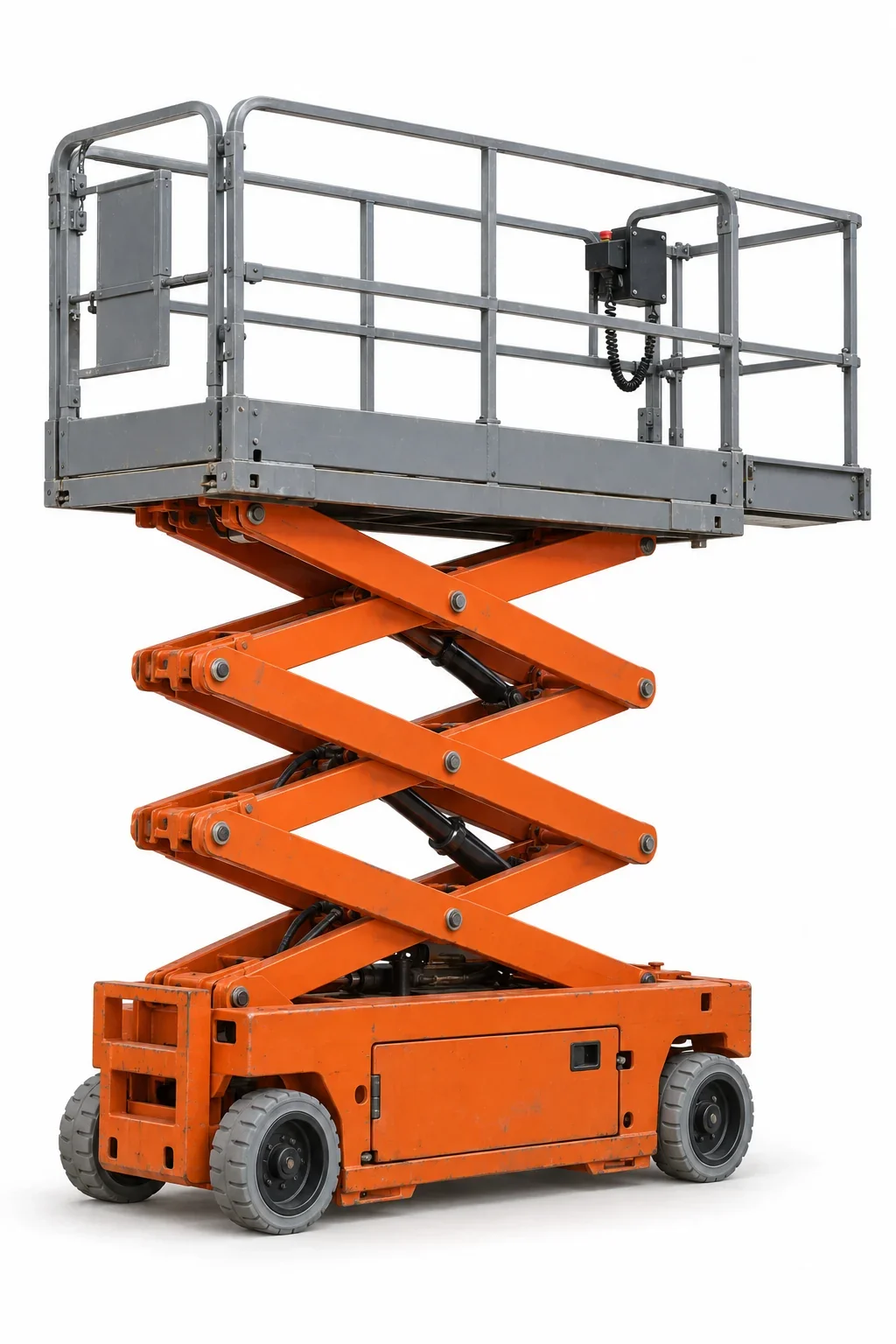
Clay-rich soils around Raleigh hold moisture, creating slick skins and soft spots after rain. Compacted haul paths may look firm but still shear under load on slopes. These variables push selection toward rough-terrain scissor lifts designed for uneven, unfinished ground rather than slab-only units.
Specs that narrow the field
- Platform height vs. site wind exposure and workface geometry: match vertical reach to the task and evaluate the setup location per site procedures and the unit’s instructions.
- Ground clearance and tire type: outdoor transitions, ruts, and utility cuts call for clearance and tires intended for rough surfaces.
- Machine width and weight: verify access through gates, temporary fencing, and tight staging lanes common on urban infill projects.
Where rough-terrain scissors excel
- Exterior cladding, glazing prep, and signage where the lift can sit close to the work.
- Utility runs and canopy work around commercial entries with unsettled subgrades.
- Multi-trade punch lists on unfinished pads between weather events.
Alternatives for complex façades
Where architectural projections or canopies block a straight vertical approach, an articulating or telescopic boom may better fit the geometry. See /boom-lift-rental/ for reach comparisons.