Define the control goal first
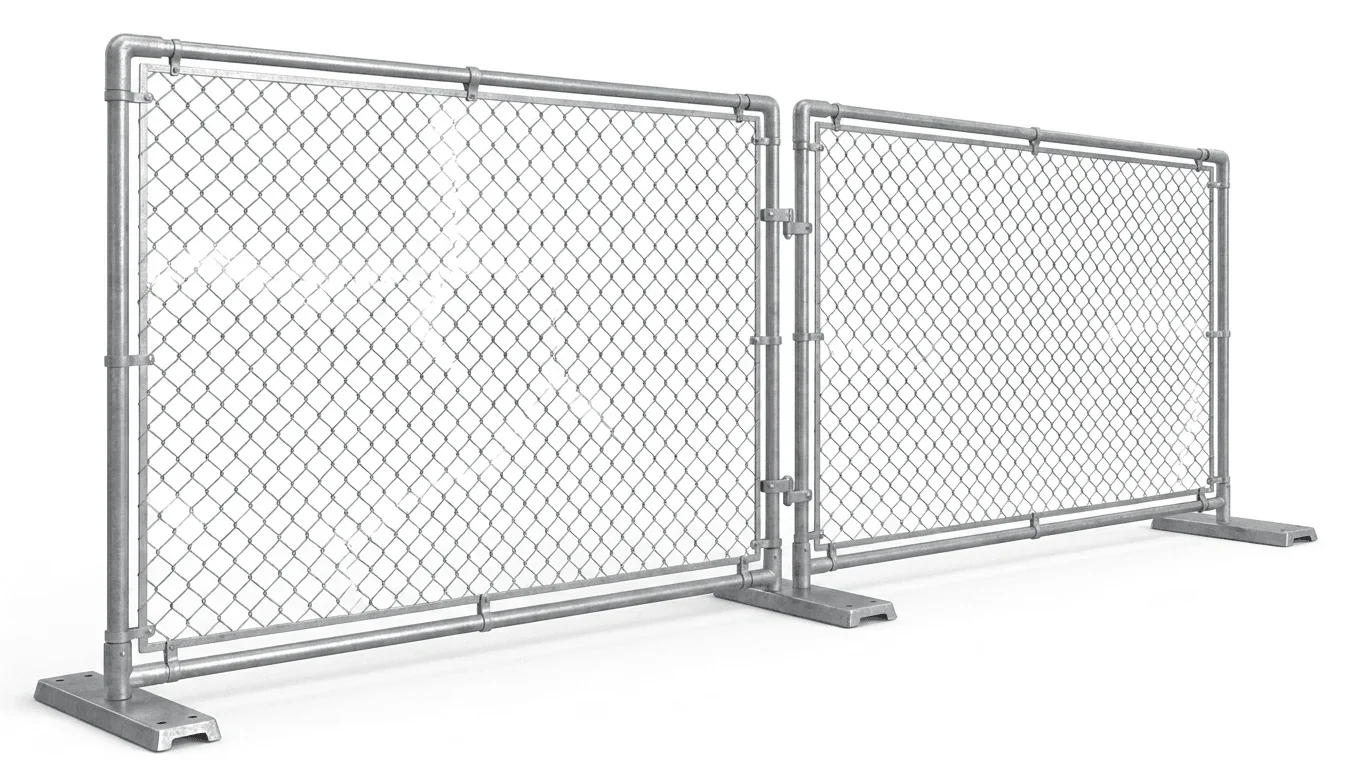
- Perimeter security: continuous lines with limited gates for equipment and material.
- Pedestrian redirection: barricade arrays that guide people around façade work or sidewalk closures.
- Vehicle separation: sturdier bases where trucks and forklifts operate in shared spaces.
Ground and base considerations in Raleigh
Clay surfaces may pump or rut after storms, changing how feet or blocks bear on the ground. A fence run set across soft fill can lean if the base area is too small. Identify firm paths, avoid drainage swales, and plan tie-ins at corners and gates where loads concentrate.
Layout near aerial and material handling
Keep panel lines outside the swing, outreach, and approach areas for boom lifts and telehandlers. For slab work with electric scissor lifts, check that barricades allow a straight approach to the task edge without squeezing the machine. Rougher exterior zones that expect rough-terrain scissor lifts need wider gates and sturdier corners to handle tire scrub near turns.
Access points and phase changes
- Gate width and frequency should match delivery patterns downtown versus wider industrial yards.
- Where sidewalks shift during façade work, plan staged barricade moves that maintain clear sightlines at crosswalks and alleys.
Quick planning checklist
- Control objective and expected duration
- Soil firmness and drainage along the fence path
- Conflicts with lift outreach, truck turns, and staging areas
- Gate count, width, and visibility for day and night use
Exterior and elevated work zones must follow site procedures and the selected equipment’s instructions, especially where the public passes nearby.