Check the access path first
- Small doorways, corridors, and elevators often set the maximum machine width and height.
- Finished floors and sensitive spaces may require non-marking tires and low ground pressure.
- Turning space near the task can be tighter than the approach; verify both.
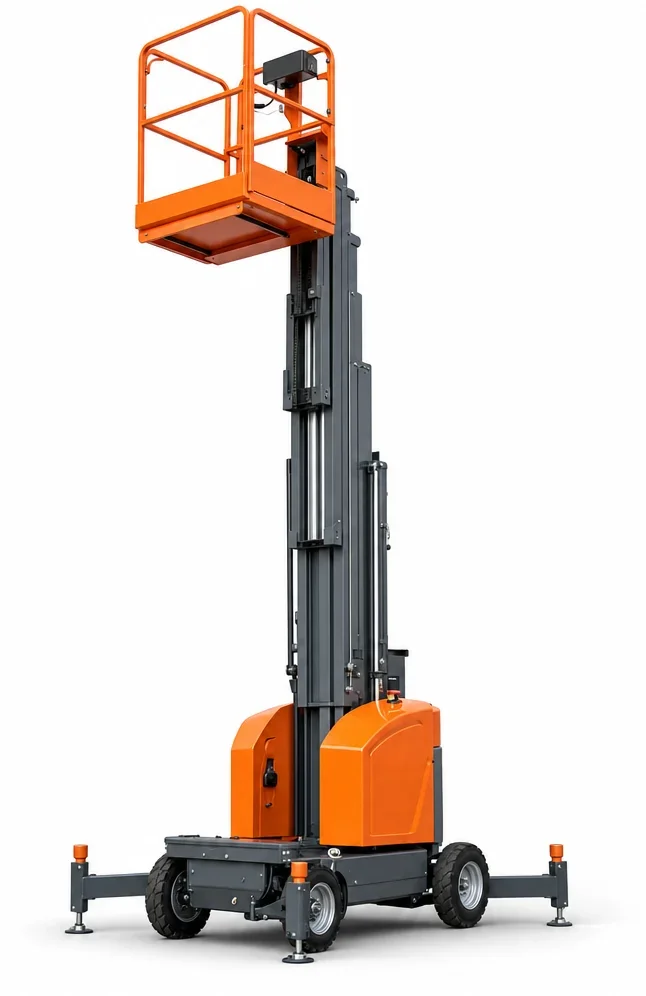
Vertical mast lifts favor jobs where the platform can sit directly below the work—ceiling devices, cable trays, signage, and compact MEP tasks. They trade deck size for extreme maneuverability in confined interior areas.
Raleigh conditions that influence planning
Regional humidity and periodic rainfall affect loading zones even for indoor work. Equipment may need to cross exterior thresholds, ramps, or temporary coverings that become slick. In multi-tenant facilities around research and tech operations, emissions and noise are also constraints; electric vertical masts address both.
Narrow the choice by task and surface
- Height requirement: Confirm the working height needed above finished floor, considering ceiling features like dropped grids or duct runs.
- Floor capacity: Finished slabs, raised floors, and trench covers each have different limits. Match the machine’s point loads to the most restrictive surface along the route.
- Platform space: If two people or larger parts must ride up, an /electric-scissor-lift-rental/ with a wider deck may be more productive.
Where vertical masts excel in Raleigh
- Institutional interiors: Quick access to overhead devices with minimal disruption.
- Light industrial and logistics offices: Signage, cameras, and cable paths in tight corridors.
Related categories
- For small outdoor or uneven-surface tasks, a /rough-terrain-scissor-lift-rental/ may provide the needed stability.
- For up-and-over placement around obstructions, see /articulating-boom-lift-rental/.
Call (984) 223-8101 or visit raleighscissorliftrental.com with doorway sizes, floor details, and working height so the platform profile matches the space.