Step 1: Can the machine sit below the task?
- Vertical work on flat slabs inside labs and tech spaces often favors electric scissor lifts or vertical mast lifts with compact footprints.
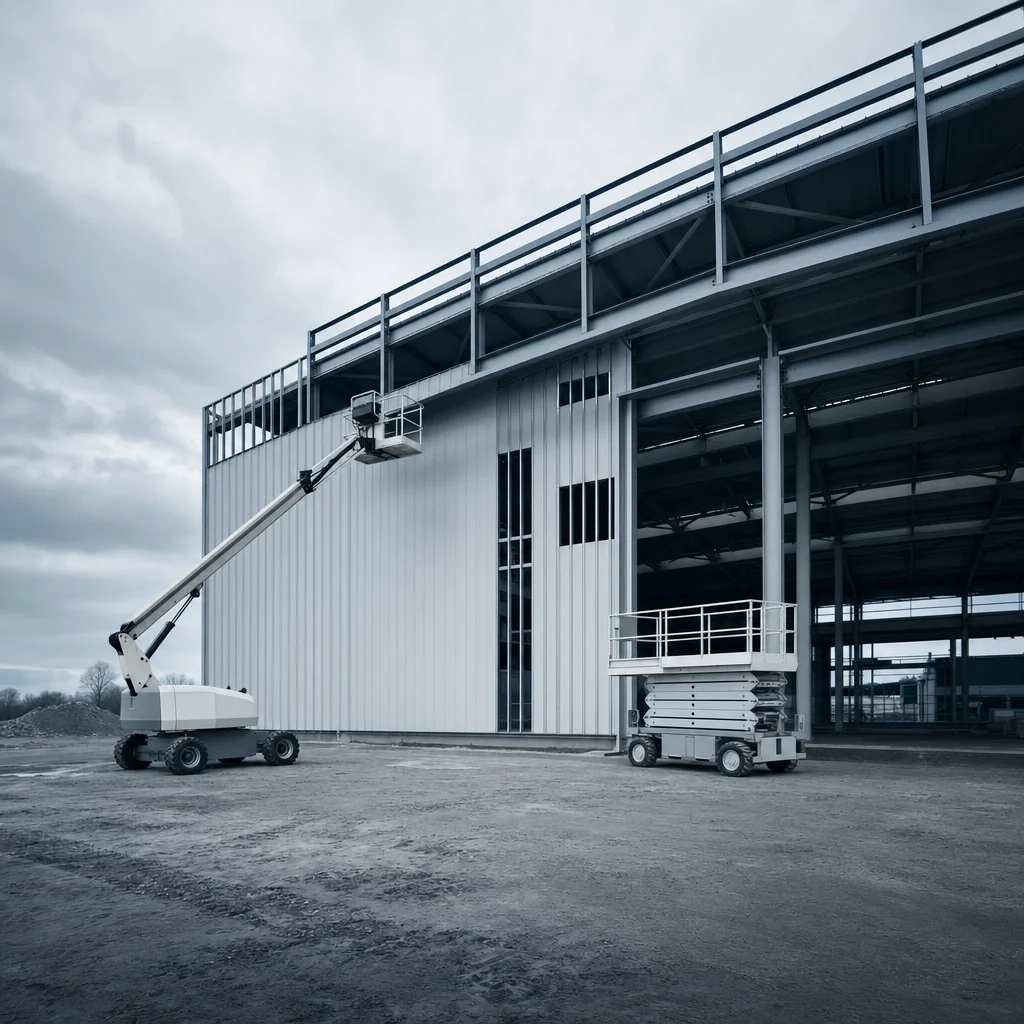
- Exterior tasks that need reach over obstacles or streets push toward boom lifts such as articulating for up-and-over geometry or telescopic for straight outreach.
Step 2: What surface and weather will the unit face?
Raleigh’s moisture-retaining clay can stay slick and soft after rainfall. For uneven grades or active pads, rough-terrain scissor lifts handle exterior slab gaps and compacted soils better than slab models. Indoors, non-marking tires and tighter turning radii matter around finished corridors and sensitive equipment.
Step 3: Route geometry and clearance
Measure the narrowest doorway, ramp slope, and any elevator cab if the unit must travel inside. Downtown access may involve alley drops and shared docks; confirm height under canopies and power lines. In industrial sites, plan crossings of dock aprons and joints that can affect wheel loading.
Step 4: Load, platform, and task position
- Platform capacity and deck extensions matter when handling heavier tools or fixtures.
- For up-and-over façade work, an articulating boom places the basket without moving the chassis into soft zones.
Site products that complete the plan
- Generators and light towers support night work and remote circuits, especially where downtown schedules compress shifts.
- Storage containers stage tools and materials near the pick point without clogging approach paths.
- Temporary fencing and barricades define routes around aerial work zones and truck courts.
Raleigh-specific planning notes
- Expect clay subgrades that hold moisture; verify firm, level placements for exterior machines and support gear.
- Research interiors often require electric power, low noise, and clean tires; plan lift size against door and elevator constraints.
- Logistics yards need wider gate openings and sightlines where lifts and trucks mix.
Actual conditions and the selected unit’s instructions govern all exterior or elevated work.
If you know your work height and surface, jump to a category: - Electric scissor lifts - Rough-terrain scissor lifts - Boom lifts - Telehandlers - Forklifts - Vertical mast lifts - Generators and light towers - Storage containers - Temporary fencing and barricades